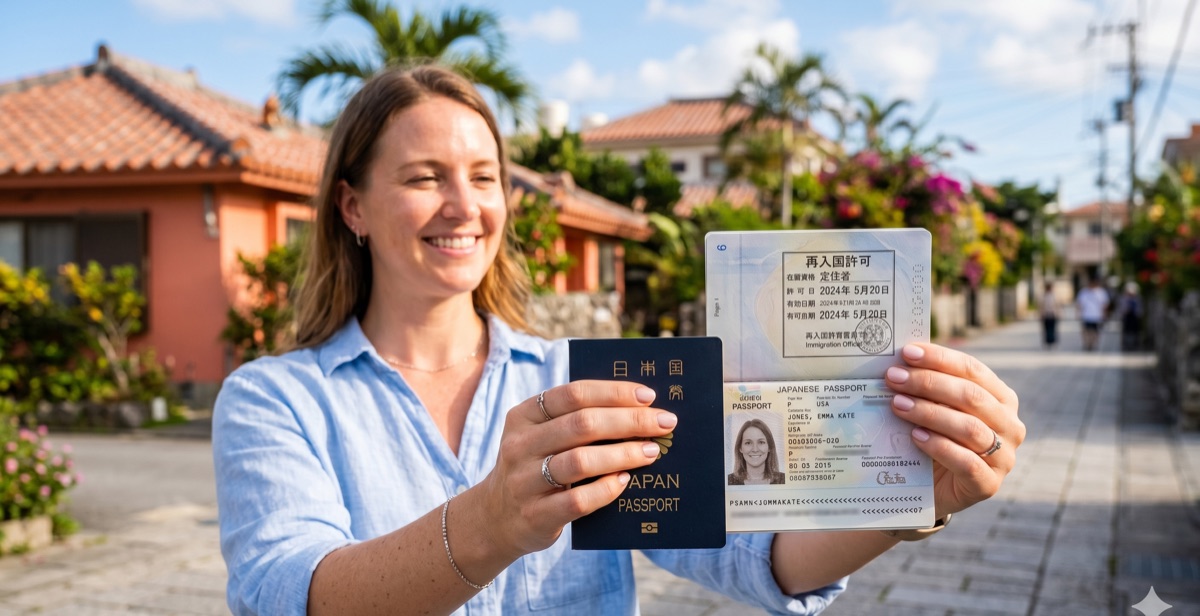
Japan Has No Retirement Visa — Here's What That Means
Unlike Thailand, Malaysia, or Portugal, Japan does not offer a dedicated retirement or passive-income visa. Every long-stay option is tied to something: a job, a business, a Japanese spouse, a large savings balance, or specialized skills. The good news is that Okinawa's unique position — heavy US military presence, English-teaching demand, growing remote-work culture, and a lower cost of living than Tokyo — means many paths are realistic for ordinary people.
This guide covers every visa category that can put you in Okinawa for a year or more, with current income thresholds, processing notes, and plain-English verdicts on who each one actually suits.
Rule changes in 2025–2026: Several visa categories were updated in late 2025. The Business Manager Visa capital requirement jumped from ¥5M to ¥30M (October 2025), and status-change fees are rising significantly in 2026. Always verify current rules at the nearest Japanese consulate before applying.
At a Glance: All Long-Stay Options
| Visa / Status | Who It's For | Max Duration | Work Allowed? | Difficulty |
|---|---|---|---|---|
| Digital Nomad | Remote workers, freelancers | 6 months | Non-Japan only | Moderate |
| High Net Worth (DA No.40) | Retirees with ¥30M+ savings | 1 year | No work | Moderate |
| Work Visa (Engineer / Humanities) | Employees with Japanese employer | 1–5 years (renewable) | Yes, for sponsor | Moderate |
| Highly Skilled Professional | High-income professionals | 1–5 years (renewable) | Broad permission | Moderate–Hard |
| Spouse / Family Stay | Married to Japanese national or work-visa holder | 1–5 years (renewable) | 28 hrs/week | Easier |
| Long-Term Resident | Japanese ancestry, special cases | 1–5 years (renewable) | Unrestricted | Varies |
| SOFA Status | US military & DoD civilians/contractors | Duration of orders | On-base only | N/A (military) |
| Permanent Residency | Long-term residents (5–10 yrs) | Indefinite | Unrestricted | Hard |
Digital Nomad Visa
Designated Activities
Remote Worker
How to Apply
Okinawa + Digital Nomad: Okinawa is a popular choice for digital nomads — fast fiber internet in Chatan and Naha, English-friendly cafes near the bases, and year-round warmth. Monthly rent for a furnished 1LDK starts around ¥60,000–¥90,000, well below Tokyo rates. The 6-month limit is the main frustration.
High Net Worth Long-Stay Visa
This is Japan's closest equivalent to a retirement visa. Officially called Designated Activities (Long Stay for Sightseeing and Recreation), it allows wealthy foreigners to live in Japan for up to one year — purely for leisure, tourism, and rest. No work of any kind is permitted.
Designated Activities
Long Stay / DA No. 40
What You'll Need
Work Visa: Engineer / Specialist in Humanities
This is the most common long-stay visa for foreigners in Okinawa outside of military SOFA status. Officially called Engineer/Specialist in Humanities/International Services, it covers a wide range of professional roles. English teachers, IT workers, hotel staff, translators, and marketing professionals all typically land here.
The critical requirement: you need a Japanese employer to sponsor you. You cannot self-sponsor, and you generally cannot use this visa for freelance work.
Who qualifies
- University degree in a field related to the work you'll be doing in Japan
- Or: 10+ years of relevant professional experience (study in a related field counts)
- A Japanese employer willing to sponsor the Certificate of Eligibility (COE)
- Salary equal to or greater than a Japanese employee in the same role (~¥200,000–¥250,000/month minimum)
Okinawa context
English teachers (ALTs, eikaiwa instructors, university lecturers) make up a large slice of work-visa holders in Okinawa. Programs like JET handle the sponsorship for you. Private English schools (Aeon, ECC) also sponsor directly. For other fields, smaller Okinawa companies are less experienced with COE paperwork than Tokyo firms — budget extra time and consider hiring a licensed immigration lawyer (gyosei shoshi).
JET Programme: If you have a university degree and want to teach English, the Japan Exchange and Teaching Programme handles everything — COE, visa sponsorship, placement, and housing coordination. Applications open each autumn for the following August placement. Competition is stiff but Okinawa placements do come up.
Highly Skilled Professional (HSP) Visa
The HSP visa is Japan's points-based immigration track for high-value professionals. It's harder to qualify for than a standard work visa, but the benefits are significantly better — including the fastest path to permanent residency in the Japanese system.
Highly Skilled
Professional
How Points
Are Calculated
HSP in Okinawa specifically: Fewer Okinawa employers are familiar with HSP sponsorship compared to Tokyo. This visa is more common among researchers at University of the Ryukyus, professionals at Okinawa Institute of Science and Technology (OIST), and those working for international companies with Okinawa branches. OIST in particular is very experienced with HSP applications for researchers.
Spouse & Dependent (Family Stay) Visa
If you're married to a Japanese national, or your spouse holds a qualifying work visa, you can live in Okinawa on a Spouse or Dependent visa. This is one of the most accessible long-stay options for couples.
Spouse Visa
永住者・日本人の配偶者等
Family Stay
家族滞在
Long-Term Resident Visa
The Long-Term Resident (定住者) status is a catch-all for people with specific ties to Japan that don't fit neatly into other categories. The most common groups are:
- Nikkeijin — people of Japanese descent (third generation and beyond, or those with a Japanese grandparent). Work is unrestricted and PR is accessible in 5 years.
- Children of Japanese nationals who were raised outside Japan
- Former spouses of Japanese nationals in certain circumstances (divorce with children, humanitarian grounds)
- Special permanent residents — ethnic Koreans and Taiwanese with pre-war Japanese nationality ties
If you have Japanese ancestry, this is worth exploring. Nikkeijin status has essentially no work restrictions and a relatively smooth PR pathway.
SOFA Status — The Okinawa Wildcard
Okinawa is home to roughly 70% of all US military facilities in Japan and one of the largest concentrations of American military personnel outside the continental US. A substantial portion of Okinawa's expat community lives here not on a standard Japanese visa, but under SOFA — the Status of Forces Agreement.
What SOFA covers: Active-duty US military personnel, DoD civilian employees, and their authorized dependents do not require a Japanese visa for their stay in Okinawa. Their legal status is governed by the US-Japan SOFA treaty, not immigration law. Many US military contractors are also granted SOFA status if their work directly supports a US armed forces contract.
Implications of SOFA for daily life
- Base access: On-base housing, commissary, and PX are available to those with SOFA status. Many SOFA households live on-base and have limited interaction with Japanese immigration procedures.
- Off-base life: SOFA holders who live off-base still need to register at the city/town office and follow local ordinances. They can rent apartments, open bank accounts, and enroll children in Japanese schools.
- After SOFA ends: When orders conclude, SOFA status ends. Many veterans and military families who fall in love with Okinawa then transition to a standard Japanese visa — typically a work visa, spouse visa (if married to a Japanese national), or the digital nomad visa.
- Contractors: Not all contractors get SOFA status — check with your contracting company and the relevant DoD authority. Those without SOFA coverage need a standard Japanese work visa.
Transitioning out of SOFA: If you want to stay in Okinawa after military service, start planning your civilian visa 6–12 months before separation. The transition from SOFA to a civilian status of residence requires applying through the normal Japanese immigration process. You cannot simply stay on SOFA after your orders end.
Permanent Residency — The Goal
Permanent residency in Japan (永住者) is the most secure immigration status short of citizenship. You can work in any job without restriction, renew your residency card every 7 years rather than annually, and are not required to leave Japan if you lose your job. PR does not grant voting rights or a Japanese passport — those require naturalization.
| Route to PR | Time Required | Key Conditions |
|---|---|---|
| Standard (work visa) | 10 years | At least 5 of those years on work/residence status; currently hold 3- or 5-year visa |
| Spouse of Japanese national | 5 years in Japan (3 years on spouse visa) |
Genuine marriage; continuous residence; no tax/pension arrears |
| Long-Term Resident (Nikkeijin) | 5 years | Good-standing residence; tax compliance; stable income |
| HSP Visa — 70+ points | 3 years | Must maintain 70 pts for 3 consecutive years |
| HSP Visa — 80+ points | 1 year | Must maintain 80 pts for 1 consecutive year |
Requirements across all routes
- No tax or pension arrears — immigration checks your national health insurance, pension, and resident tax payment history. Gaps can disqualify an otherwise eligible application.
- Currently hold the longest visa period for your category — if you're eligible for a 3-year renewal but only got 1 year, get it renewed to 3 years before applying for PR.
- Proof of stable income — typically ¥3M+ annually; higher is better. Okinawa's wages are lower than Tokyo's on average, so budget carefully if your PR goal is on a fixed timeline.
- Good conduct — no criminal record, no immigration violations.
Choosing Your Path
Most people reading this guide fall into one of a handful of situations. Here's honest advice for each:
| Your situation | Best starting visa | Long-term path |
|---|---|---|
| Remote worker, income $65K+ | Digital Nomad (6 months) | Find Japanese employer → Work visa → PR |
| Retired, $200K+ liquid savings | High Net Worth (DA No. 40) | Renew annually; no clear PR path on this status alone |
| English teacher, university degree | Work visa via JET or private school | Work visa → 10-yr PR (or HSP if salary qualifies) |
| Married to Japanese national | Spouse visa | Spouse visa → PR in 5 years (cleanest route) |
| High-income professional (IT, research) | HSP Visa | HSP → PR in 1–3 years (fastest civilian path) |
| Japanese ancestry | Long-Term Resident | Long-Term Resident → PR in 5 years |
| US military / DoD civilian | SOFA status (automatic) | Post-service: spouse visa, work visa, or digital nomad depending on situation |
There is no silver bullet: Japan has no visa that says "live here indefinitely without working or a Japanese spouse." The High Net Worth visa comes closest, but it's capped at one year with no clear renewal path. If long-term Okinawa living is your goal, plan to either work, marry, or accumulate enough years on renewable statuses to eventually qualify for PR.
Frequently Asked Questions
Sources
- Ministry of Foreign Affairs Japan — Work or Long-Term Stay Visas
- MOFA — Designated Activities: Digital Nomad Visa
- MOFA — Designated Activities: Long Stay for Sightseeing and Recreation
- Embassy of Japan (Chicago) — Digital Nomad Requirements PDF
- ACROSEED — HSP Points Calculator and Requirements
- Embassy of Japan in the US — SOFA Visa Information
- Heritage Administrative Scrivener Office — High Net Worth Long-Stay Visa
- Japan PR Checker — Permanent Residency Routes 2026