The big picture
Japan's healthcare system consistently ranks among the world's top performers — low infant mortality, high life expectancy, universal coverage, and costs that would shock anyone coming from the US. The fundamental rule is simple: every person living in Japan for three months or more must enroll in public health insurance, regardless of nationality. There are no exceptions.
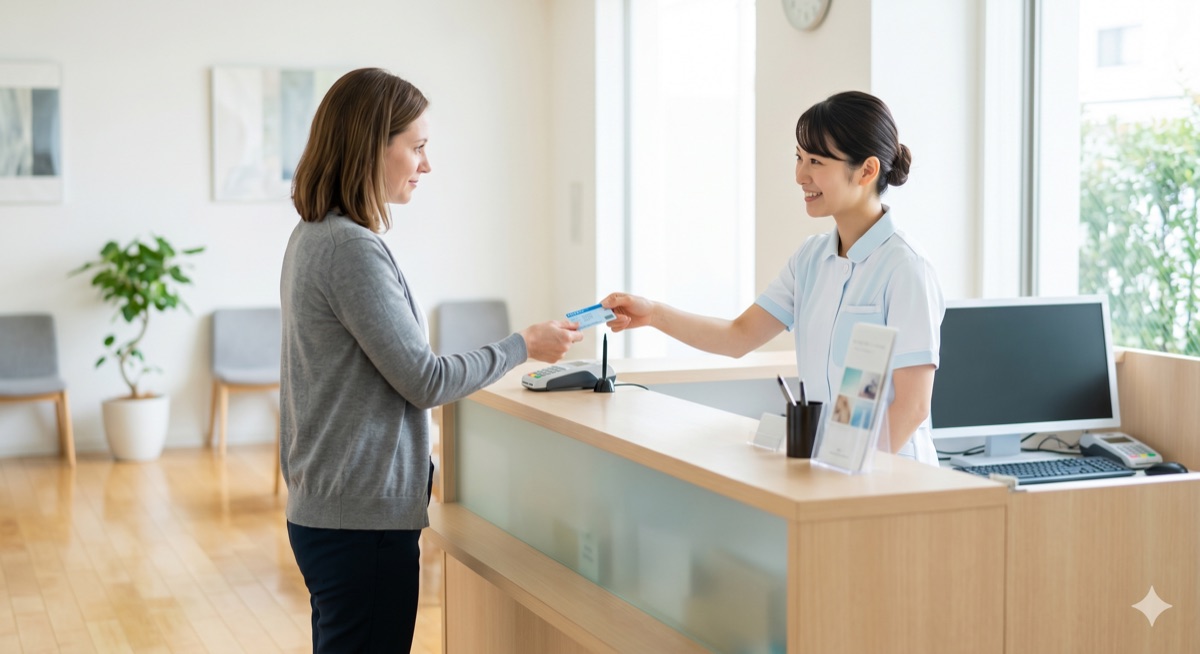
As a foreign resident, you'll join the same system as Japanese citizens. You pay premiums, you show your insurance card at the clinic, and you pay 30% of the bill at the counter. The other 70% is covered. For most routine care, that 30% comes out to a few hundred to a few thousand yen.
NHI vs. Shakai Hoken — which system are you in?
There are two public health insurance systems in Japan. Which one applies to you depends on your employment status.
National Health Insurance
Run by your municipality. Covers the self-employed, freelancers, students, those on dependent visas, and anyone not covered by an employer plan. You pay 100% of the premium yourself — there's no employer subsidy.
- Premiums based on prior year's income and household size
- Each person in household adds to the premium
- Enroll at your city office within 14 days of getting your residence card
- Income-based reductions available for low earners
Employees' Health Insurance
Employer-based system. Your company handles enrollment and splits the premium roughly 50/50 with you. Coverage is slightly broader and includes benefits NHI doesn't offer.
- Employer pays ~half the premium — effectively a pay raise
- Injury/sickness allowance: two-thirds salary for 4+ consecutive sick days
- Maternity allowance: two-thirds salary for 98 days around birth
- Dependents (spouse, children) added at no extra cost
If you're employed: Ask your HR department which plan you're enrolled in before trying to sign up at the city office. Full-time workers at most companies are automatically enrolled in Shakai Hoken — enrolling in both is a common (and costly) mistake.
NHI premiums — what you'll actually pay
NHI premiums are set by each municipality and calculated based on your previous calendar year's income. New arrivals often qualify for a flat-rate minimum in their first year if they have no prior Japan-sourced income.
| Prior Year Income | Estimated Annual NHI Premium | Per Month |
|---|---|---|
| No Japan income (first year) | ~¥20,000–¥50,000 | ~¥1,700–¥4,200 |
| ¥2,000,000/yr | ~¥130,000 | ~¥10,800 |
| ¥4,000,000/yr | ~¥400,000 | ~¥33,300 |
| ¥8,000,000/yr | ~¥940,000 | ~¥78,300 |
| Maximum cap | ¥1,060,000 (2026) | ~¥88,300 |
Important for new arrivals with high foreign income: Your NHI premium in Japan is calculated on prior-year income — even income earned abroad. If you earned ¥10M+ before moving, your first-year premium could be very high. Visit the city office and ask about income-based reduction (軽減); qualifying low earners can see premiums cut by 30–70%.
2027 visa rule — pay on time, every month: Starting June 2027, Japan will deny visa renewals and status changes to foreign residents with unpaid NHI premiums or National Pension contributions. This is now formal government policy announced in January 2026. Missing payments is no longer just a financial issue — it directly affects your right to stay in Japan.
The monthly out-of-pocket cap
One of the best features of Japan's system that most foreigners don't know about: there's a monthly cap on what you pay out of pocket, regardless of how much treatment you receive. If you have major surgery or a serious illness, the system steps in.
| Income Tier | Monthly Cap (2026) | After 3 Qualifying Months |
|---|---|---|
| Low income (住民税非課税) | ¥35,400 | ¥24,600 |
| Standard income | ¥85,800 + 1% | ¥44,400 |
| Higher income | ¥167,400 + 1% | ¥93,000 |
| Highest income | ¥252,600 + 1% | ¥140,100 |
To claim this benefit (高額療養費, kōgaku ryōyō-hi), apply at your city office or NHI office after the month in which you had high costs. For Shakai Hoken holders, it's processed automatically through your employer. You can also get a pre-authorization certificate that limits upfront payments at the hospital.
Long-term care insurance (age 40+)
Foreign residents aged 40 and older are also enrolled in Japan's long-term care insurance (介護保険, kaigo hoken) automatically when they join NHI or Shakai Hoken. A small additional premium is added to your monthly payment.
This insurance covers home-visit care, day services, short-stay care, and nursing facilities for those who need ongoing support due to age or disability. Benefits are available from age 65, or from age 40 if you develop one of 16 specified age-related conditions.
The 30% copay applies here too, with income-based reductions available. Nursing home costs in Japan typically run ¥150,000–¥300,000 per month for a facility bed, meaningfully lower than comparable care in the US or Australia.
What's covered — and what isn't
- Doctor visits and consultations
- Diagnostics (blood tests, X-rays, MRI, CT)
- Surgery and hospitalization
- Prescription medications (approved formulary)
- Mental health treatment (same 30% copay)
- Basic dental: fillings, extractions, cleanings, basic dentures
- Rehabilitation
- IVF and assisted fertility (since April 2022)
- Childbirth (prenatal care; delivery has separate lump-sum payment)
- Cancer screening (basic)
- Cosmetic surgery and procedures
- LASIK and refractive eye surgery
- Orthodontics and cosmetic dentistry
- Ceramic/tooth-coloured fillings (only silver covered)
- Dental implants
- Routine vision checkups and glasses (partial exception for children)
- Most vaccines (flu, travel, etc.)
- Standard annual health checkups (basic version only)
- Private hospital room surcharges
- Alternative medicine, acupuncture (most cases)
Finding English-speaking care in Okinawa
Okinawa has more English-capable medical facilities than almost anywhere in Japan outside Tokyo, largely because of the longstanding American military presence. That said, "English-speaking" often means one doctor on staff who can communicate in English — not a fully bilingual hospital. Always call ahead.
Hospitals
Chubu Tokushukai Hospital
The most foreigner-friendly major hospital on the island. JCI-accredited (the international gold standard for hospitals), with multilingual floor maps, translation services, and English support common in emergency and general medicine. Covers emergency, internal medicine, surgery, orthopedics, cardiology, pediatrics, and OB-GYN.
Nakagami Hospital
Modern, well-equipped, and experienced with foreign patients. Covers internal medicine, surgery, orthopedics, neurosurgery, OB-GYN, ENT, and dermatology. A solid option for central Okinawa residents who aren't near Chubu Tokushukai.
University of the Ryukyus Hospital
Okinawa's main academic medical center. Handles complex cases and has specialist departments not found elsewhere on the island. English availability varies significantly by department — call ahead, especially for specialties.
Makiminato Chuo Hospital
Listed by the US Embassy as an English-accessible facility. Has an English phone line for initial contact. Good option for residents in the southern part of the island or Naha area.
Clinics and specialist care
Naha International Clinic by Experts
English-first clinic designed for international residents and travelers. Telemedicine available. Can provide referrals to partner hospitals for cases requiring further care.
OBGYN Yui Clinic
Bilingual OB-GYN care popular with the foreign resident community. Well-regarded for prenatal support and delivery coordination for non-Japanese patients.
Sunabe Smile Dental
Located in the heart of expat territory near the Sunabe seawall. English-capable staff, familiar with foreign insurance situations, and convenient for the Chatan/Ginowan corridor.
Life Dental Clinic
Bilingual dental clinic with a strong reputation among expats. Handles NHI-covered work and can discuss options for non-covered cosmetic treatments clearly in English.
O'Sullivan Counseling
English-language mental health counseling serving the Okinawa expat community. Individual therapy, couples counseling, and adjustment support for those navigating life in a new country.
Minnano-Haisha-san
Popular with the expat community in Okinawa City (Koza area). English-speaking staff available, accepts NHI, and known for clear pricing explanations.
Okinawa International Clinic Alliance: A network of clinics and telemedicine services founded specifically to improve healthcare access for non-Japanese speakers. They offer nurse home visits with medical equipment, telemedicine consultations, and medication delivery within 2 hours — useful if you're ill and can't drive. Visit okinawa-international-clinic.org.
How a clinic visit works
The process at a Japanese clinic is straightforward once you know what to expect:
- Book in advance when possible. Walk-ins are accepted at many clinics, but waits can be long. Most clinics open around 9am; aim to arrive early in the morning or right after lunch.
- Bring your insurance card. Without it, you pay 100% at the counter and apply for reimbursement later. It's a hassle — always carry your card.
- Reception asks your symptoms. A basic symptom list in Japanese or a translation app will help at clinics without English staff.
- See the doctor, receive a prescription slip (処方箋, shohōsen) if medication is needed. You take this to a separate pharmacy — in Japan, clinics prescribe and pharmacies dispense, they're almost always separate businesses.
- Pay at checkout. You pay your 30% copay. The bill for a standard consultation at a general clinic is typically ¥1,000–¥3,000 after insurance.
The useful phrase to confirm English availability: "Eigo hanase masuka?" (英語話せますか?) — "Can you speak English?"
Dental care
Japan's NHI covers basic dental work at the standard 70/30 split: cavity treatment with silver amalgam fillings, extractions, periodontal cleaning, and basic dentures are all included. Costs are low — a basic filling typically runs ¥1,000–¥3,000 out of pocket.
The catch is what's not covered: white/ceramic fillings, crowns, implants, orthodontics, and anything cosmetic. These are charged at full private rates, which are still significantly cheaper than the US or Australia but add up. Many expats choose to have cosmetic dental work done here anyway — private rates in Okinawa for a ceramic crown typically run ¥50,000–¥100,000 versus ¥300,000+ in the US.
Mental health
Mental health treatment — psychiatry, counseling, and psychology services when referred by a doctor — is covered under NHI at the standard 30% copay. Japan has made significant progress expanding mental health services, though stigma around seeking help still exists in some communities.
The practical challenge for foreigners is finding English-speaking providers. Psychiatrists who can conduct sessions in English are rare. O'Sullivan Counseling in Okinawa is the most established English-language therapy provider for the expat community. The Okinawa International Clinic Alliance also provides telemedicine mental health referrals.
If you're moving to Okinawa with a mental health condition you're actively managing, bring documentation of your diagnosis and treatment history, and establish care with a Japanese provider within your first few months.
Medications and prescriptions
Japanese pharmacies cannot fill a foreign prescription — you need a Japanese doctor to write you a new one. If you rely on prescription medication, your first priority after settling in should be finding a Japanese doctor who can take over your care and issue ongoing prescriptions.
Bringing medications from abroad
- Up to 1 month's supply of prescription medicine can be brought in without special paperwork.
- More than 1 month's supply requires a Yunyu Kakunin-sho (輸入確認書) — an import certificate applied for at least 14 days before arrival through Japan's Ministry of Health.
- Prohibited outright: Stimulant medications containing amphetamines (Adderall, Vyvanse, Dexedrine) are banned in Japan regardless of a valid foreign prescription. Carry these into Japan and you face prosecution. ADHD is treated in Japan with non-stimulant alternatives — speak with a Japanese psychiatrist before you arrive.
- Controlled substances (strong opioids, benzodiazepines above certain quantities) require separate import permits from the Narcotics Control Department.
ADHD medication warning: Adderall, Vyvanse, and similar amphetamine-based medications are Schedule I stimulants in Japan and completely prohibited — even with a valid US prescription. If you currently take these, you must switch to a permitted alternative (Strattera/atomoxetine is available in Japan) before arriving. Do not assume you can manage this at the border.
Emergencies
Emergency number: 119 (ambulance and fire). The dispatcher may not speak English — stay calm and say the address clearly. Okinawa's emergency dispatch has some English capability given the military presence, more than most of Japan.
For life-threatening emergencies, Chubu Tokushukai Hospital and Nakagami Hospital both have 24-hour emergency departments experienced with foreign patients. The University of the Ryukyus Hospital handles the most complex trauma and specialist emergencies on the island.
Emergency care is provided regardless of insurance status — you will be treated first and billed later. If you don't have your insurance card, bring it to the hospital within a few days to have the bill corrected to the 30% copay rate.
For non-urgent situations after hours, the Okinawa International Clinic Alliance's nurse home-visit service is an option. The US Embassy's Naha doctors list (updated periodically) is also a useful reference for English-accessible facilities.
Supplemental insurance
Most long-term foreign residents in Okinawa rely solely on NHI or Shakai Hoken. Japan's universal system is comprehensive enough that supplemental private insurance is optional rather than essential — unlike the US, a major illness will not bankrupt you under NHI.
That said, some expats add supplemental coverage for specific gaps: dental (for ceramic work and implants), vision care, and evacuation coverage if they travel frequently. Insurers like Pacific Prime and AXA offer expat policies that layer on top of NHI without replacing it.
Frequently asked questions
Sources & further reading
- Kantenna — Health Insurance in Japan for Foreigners: The Complete Guide 2026
- E-Zeirishi — Japan NHI for Foreign Residents: Enrollment, Costs & Coverage 2026
- OKI Press — Finding English-Speaking Medical Care in Central Okinawa
- Okinawa International Clinic Alliance — English-language telemedicine and home visits
- U.S. Embassy Japan — Medical Resources in Okinawa (Naha doctors list)
- O'Sullivan Counseling — English-Speaking Hospitals in Okinawa
- Commonwealth Fund — Japan International Health Care System Profile
- Embassy of Japan in the US — Bringing Medications into Japan
- Japan Health Policy NOW — Long-Term Care Insurance Overview